Moss-covered concrete, weathered timber and stained exterior walls can transform dramatically with the right combination of water pressure, technique and surface care. Hydroblasting services use controlled, high-pressure water to lift dirt, algae, lichen and stubborn staining without the abrasive impact of sandblasting.
For Auckland property owners, the difference lies in knowing which pressure suits each surface and how to contain runoff, protect nearby plants and prevent damage to fragile finishes. This guide explains what professional hydroblasting involves, where it is most effective and how to choose a reliable provider for driveways, decks, roofs and exterior walls. Let’s explore how to achieve a cleaner result while keeping your property protected.
- See the difference before booking: Hydroblasting uses pressurised water without harsh chemicals or abrasive blasting to remove dirt, moss, lichen, algae and staining.
- Match the pressure to the surface: Concrete and driveways tolerate high-pressure cleaning, while timber decks, painted surfaces and weatherboard need carefully controlled pressure to prevent damage.
- Protect your property throughout the job: A reliable provider will contain runoff, shield nearby plants and people, and identify risks around windows, roofing and fragile finishes.
- Choose locally proven equipment and expertise: When comparing waterblasting services Auckland providers, check their surface-specific experience, safety practices, equipment quality and clear quotation.
- Extend the clean with simple maintenance: Regular cleaning helps prevent moss, lichen and salt spray from rebuilding, especially on driveways, decks, roofs and exterior walls.
What Is Hydroblasting and How Does It Differ from Pressure Washing?
Hydroblasting uses pressurised water to remove dirt, biological growth and weathering from exterior surfaces. It differs from ordinary pressure washing because the goal is not simply to apply maximum force: operators adjust pressure, nozzle type, working distance and cleaning pattern to suit each surface. This professional judgement is the core of effective hydroblasting services.
Detergent-led pressure washing may pre-treat heavy contamination, while hydroblasting primarily relies on controlled water flow, suitable hoses and nozzles to lift deposits. It is also unlike abrasive sandblasting, which uses media to erode a surface and can change its texture or appearance. Auckland surfaces need careful treatment because coastal salt, humidity, shade and organic growth often combine in ways that require more than one cleaning approach.
What Pressure Is Used for Different Surfaces?
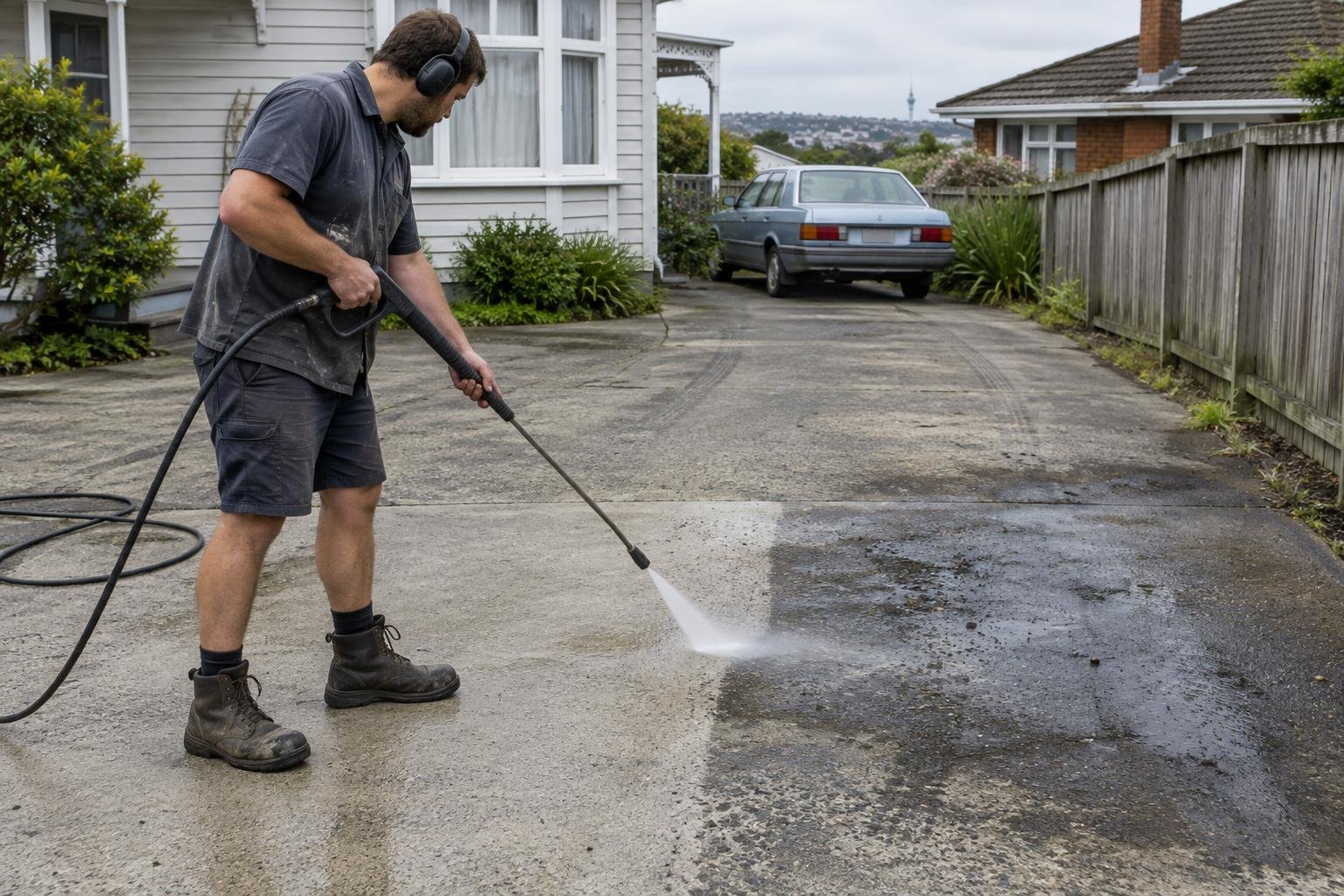
For sound concrete, driveways and paths, high-pressure water cleaning may be appropriate, commonly around 2,000–3,500 psi depending on the surface and contamination. Timber decks, painted walls, roofing and weatherboard generally need lower pressure, often around 1,000–2,000 psi, with the nozzle kept at a safe distance.
These are not universal settings. Age, coatings, mortar joints, surface preparation, access and the type of contamination determine the correct combination of pressure and technique. Aggressive settings can erode soft timber, expose mortar, lift paint, damage render or breach sealants, leaving a surface looking worse than before.
Where Hydroblasting Is Most Effective?
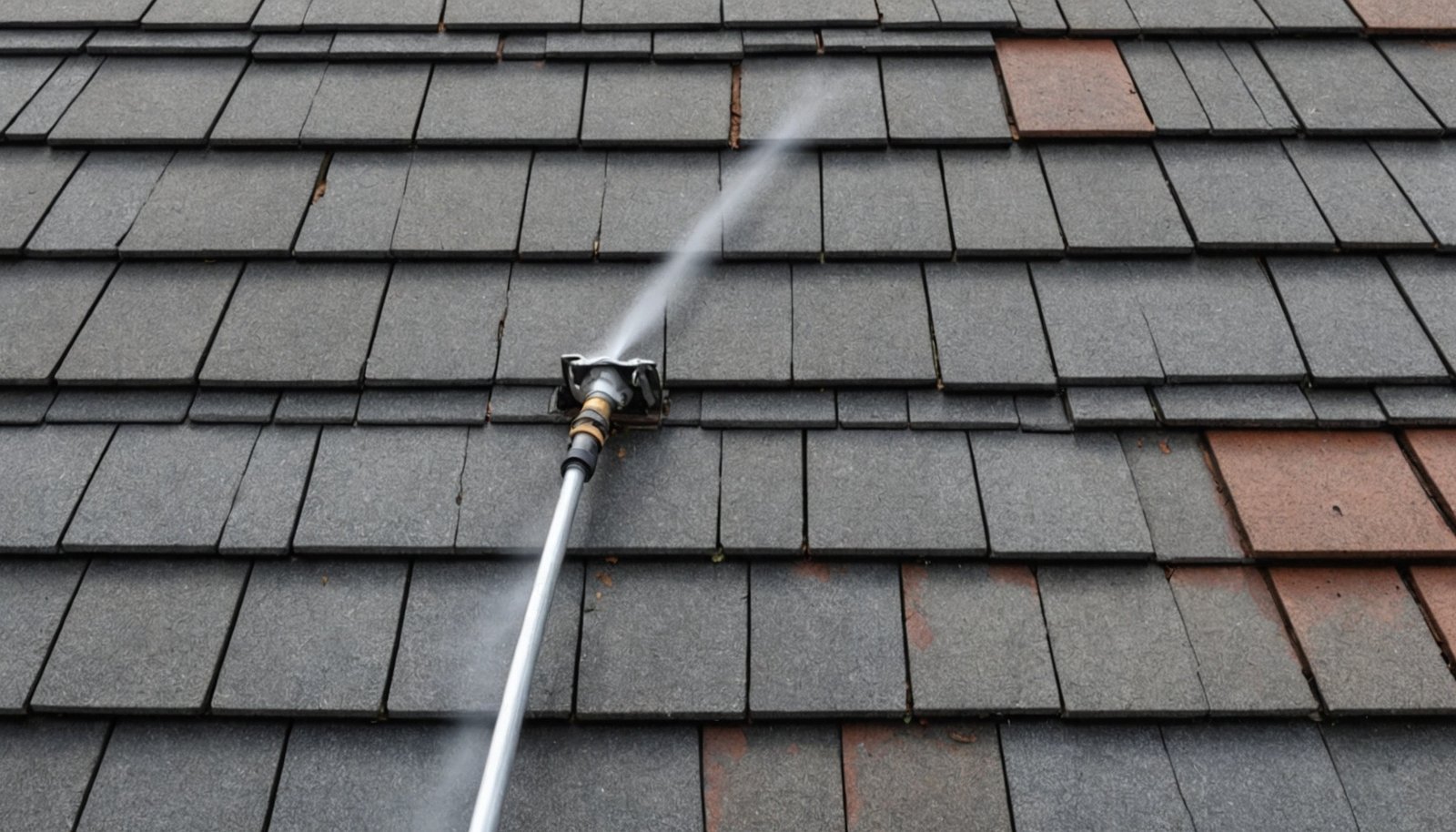
Hydroblasting transforms moss-darkened concrete into pale, even driveways and makes slippery paths feel safer underfoot. Stains disappear from walls and hard surfaces, while roof moss and lichen removal exposes the original roof colour rather than replacing it with a harsh chemical-cleaned finish. Decks, fences, rendered walls and weatherboard can all be improved when the method is matched to their construction.
Visible growth is only part of the issue. Auckland’s humidity, coastal spray, shade, leaves and poor runoff encourage regrowth, so cleaning should be combined with practical maintenance such as clearing vegetation, directing water away from walls and addressing persistent dampness.
Is Hydroblasting Safe for Roofs, Decks and Painted Exteriors?
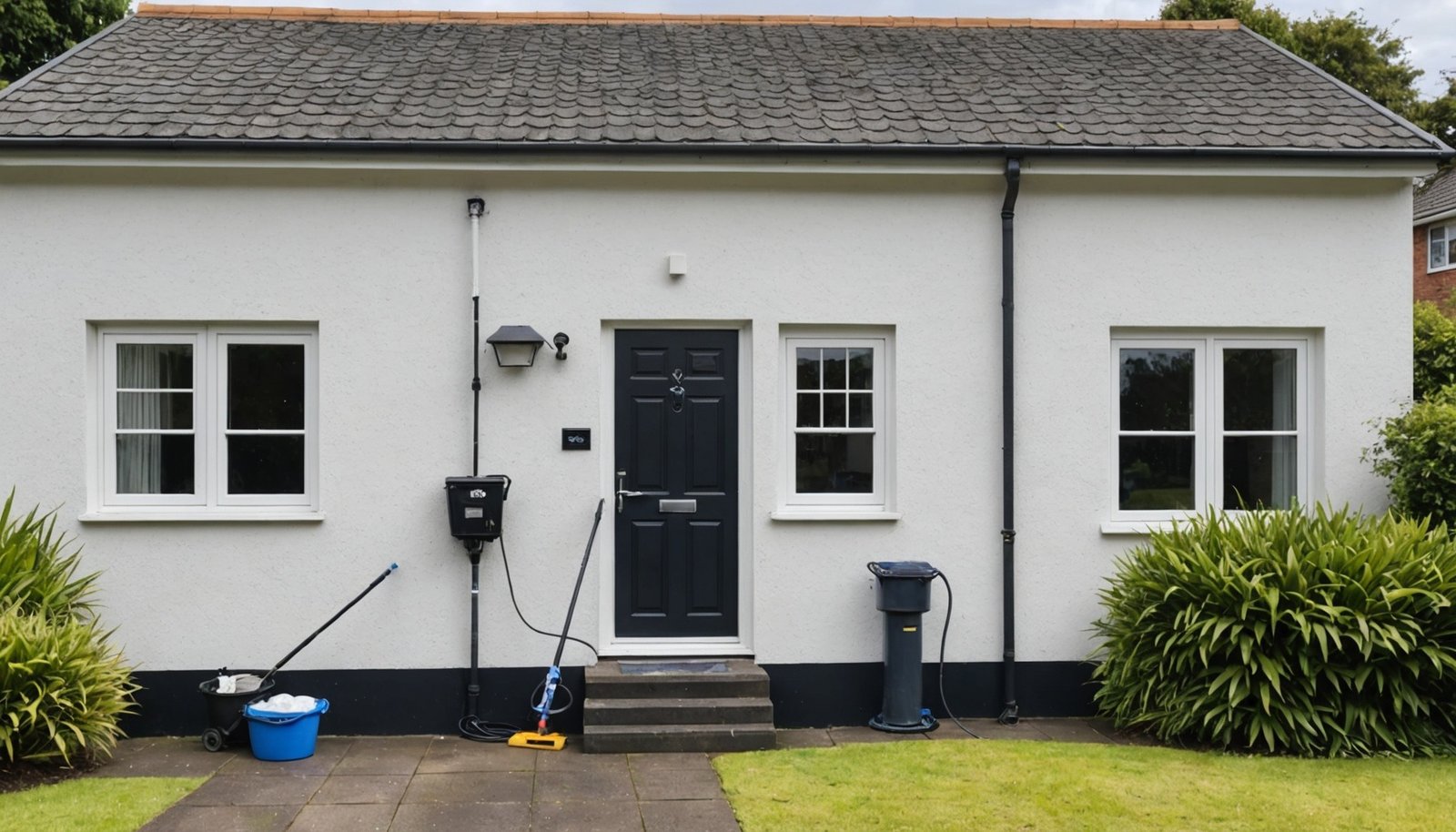
Hydroblasting can be safe for roofs, decks and painted exteriors, but only after an inspection and test area. Roofs require special attention to loose tiles, fragile coatings, flashings, penetrations, gutters and window surrounds. Decks may have uneven boards, soft timber or worn sealants, while painted and rendered surfaces can chip if pressure is excessive.
Professionals start with the least aggressive effective method, test a concealed area and increase settings only where necessary. Windows, doors, lights, plants, ventilation openings and neighbouring surfaces should be shielded, and loose materials should be identified before work begins.
Safety, Runoff and Property Protection
Safe work begins before mobilisation. The provider should plan exclusion zones, traffic and pedestrian controls, hose routes, access, drainage and weather conditions. Personal protective equipment, electrical awareness and slip management are essential, especially when wet surfaces, ladders or elevated work are involved.
Doors, windows, vehicles, landscaping and adjoining properties need protection from spray and debris. Runoff should be directed sensibly, without allowing contaminated water to enter stormwater systems. For larger commercial areas, the same planning discipline applies, including a site-specific assessment before the Warehouse Wash process begins.
Water-Only Cleaning and Environmental Considerations
Water-only cleaning reduces the need for unnecessary chemicals and avoids abrasive media, making eco-friendly cleaning solutions an important part of the service discussion. It does not mean every job is completely chemical-free: some heavily contaminated surfaces may require a suitable treatment before rinsing. The primary process remains controlled water cleaning, with products used only where they improve the result.
Responsible providers also consider contaminated runoff, sensible rinsing and protection for nearby drains and stormwater entry points. This is particularly important where moss, lichen, algae or surface coatings are being removed from large areas.
How to Choose a Waterblasting Company in Auckland?
When comparing waterblasting services Auckland property owners should look for:
- Experience with the exact surface, including decks, roofs, painted walls and commercial concrete.
- A clear test-area and surface-assessment process, rather than a single-pressure approach.
- Commercial-grade waterblasting equipment suited to the task, with maintained hoses and nozzles.
- Clear safety, runoff, insurance, access and exclusion-zone procedures.
- Transparent quotations in NZD, including preparation, protection, cleaning and expected exclusions.
Ask how the work will be completed, what cannot be treated and how the site will be left. A reliable professional waterblasting company should explain the method in plain language and provide relevant guidance through its waterblasting services resources and local experience in waterblasting services Auckland projects.
How Often Should Hydroblasting Be Done in Auckland?
There is no single interval for every property. Concrete and driveways may need attention when organic growth becomes visible or surfaces begin to stain, while decks and roofs should be checked after wet winters and periods of prolonged shade. Exterior walls benefit from routine inspections, especially where coastal spray, vegetation or runoff regularly keeps them damp.
Inspection-based maintenance is more reliable than a fixed schedule. If growth returns quickly, the cause may lie in drainage, shade, nearby trees or surface condition rather than in the cleaning method itself. Correcting those factors helps preserve the dramatic difference between a dark, moss-covered surface and the clean, refreshed exterior that careful hydroblasting can deliver.
Effective hydroblasting depends on surface-specific judgement, not maximum pressure alone. Correct pressure, nozzle selection, working distance and technique can remove moss, lichen, stains and weathering while protecting timber, paint, render, roof tiles and mortar joints. In Auckland’s coastal humidity, regular inspections, drainage improvements and vegetation control are essential to slow regrowth and maintain safer, cleaner paths, driveways, roofs and exterior walls.
When choosing a provider, assess its testing process, equipment, site safety, runoff controls and transparent NZD quotations. Careful preparation and property protection are as important as the cleaning itself. For expert guidance and tailored solutions, review professional hydroblasting services and waterblasting services in Auckland.