A powerful jet of water is not always the best way to clean an exterior—in fact, it can strip paint, loosen roof tiles and push moisture where it does not belong. Low pressure cleaning offers a gentler approach, using controlled pressure and suitable cleaning solutions to remove moss, lichen and algae while protecting delicate surfaces.
For Auckland homes, this matters throughout the wet winter months, when persistent damp encourages organic growth on roofs, decks, fences and cladding. The right PSI, nozzle pattern and biodegradable chemistry can deliver a visibly cleaner result while using water more efficiently.
Let’s explore how gentle exterior cleaning works, where it is safer than high pressure washing, and how Water Blasting Services Auckland can help restore your property without compromising its surfaces.
- Protect delicate surfaces without sacrificing results: Low pressure cleaning typically uses around 100–300 psi with a fan nozzle to lift dirt, moss, lichen and algae without damaging painted, weathered or older exterior surfaces.
- Choose low pressure where damage is likely: Soft washing suits roofs, decks, fences and cladding where high pressure washing can strip coatings, loosen tiles or force moisture beneath surfaces.
- Use the right chemistry for a deeper clean: Biodegradable cleaning solutions applied at low pressure allow contaminants to break down before rinsing, making this approach effective and water-conscious in Auckland’s damp conditions.
- Reduce regrowth with consistent maintenance: Removing organic growth and keeping drainage paths clear helps discourage the return of moss, lichen and mould, especially during Auckland’s wet winter months.
What Is Low Pressure Cleaning?
Low pressure cleaning typically uses controlled pressure of approximately 100–300 psi, a fan-shaped nozzle and an appropriate cleaning solution. The solution loosens embedded dirt, moss, lichen and algae, while the water rinses the softened contaminants away. This method is well suited to painted, weathered and ageing surfaces because it does not force water into cracks, joints or beneath materials.
For Auckland homeowners searching for pressure washing Auckland options, technique matters as much as equipment. Controlled pressure, suitable chemistry and efficient rinsing can deliver a thorough clean while protecting the substrate and reducing unnecessary runoff.
Where Low Pressure Washing Is the Safer Choice
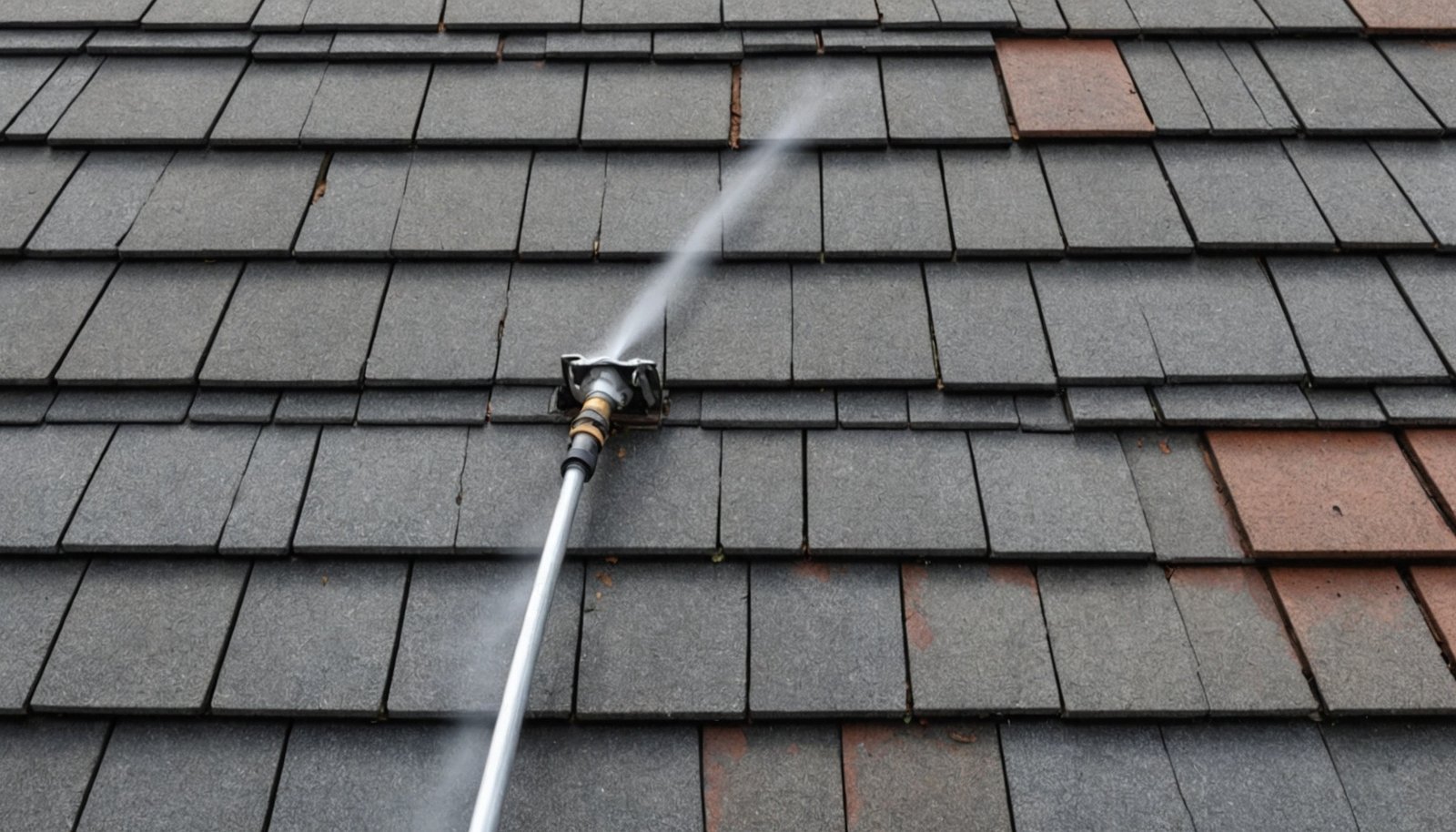
Soft wash roof cleaning is the safer approach for tiled and corrugated metal roofs. It reduces the risk of damaging fixings, dislodging roof granules or forcing water beneath corrugated sheets. It is also appropriate for delicate surface cleaning of decks, fences, painted cladding and composite boards.
Aggressive jets can split timber, scratch composite decking, lift peeling paint and drive water into gaps. By contrast, low pressure washing treats the surface more gently while allowing the cleaning solution to do most of the work. Selected concrete paths, steps and hard masonry may still suit high pressure cleaning, but only after their condition and drainage have been assessed.
For a complete exterior clean, a professionally planned house wash can combine the right treatment method for each surface rather than applying one pressure setting everywhere.
Pressure, Nozzles and Equipment for Effective Results
There is no universal pressure setting. Around 100 psi may be sufficient for delicate surfaces, while many applications work effectively between 150–300 psi. The correct psi settings for soft washing depend on the material, its condition and the level of contamination.
A broad fan nozzle distributes water more evenly than a narrow jet. Keeping the nozzle moving and allowing the cleaner to dwell for the recommended period gives the solution time to loosen organic growth before rinsing.
- Test an inconspicuous area before beginning.
- Apply the solution evenly and avoid excessive saturation.
- Rinse systematically from the highest point downwards.
- Protect windows, fittings, landscaping and drainage paths.
- Work in manageable sections and check for runoff.
Reliable equipment and correct accessories are also important when choosing services for gentle exterior cleaning.
Biodegradable Cleaning Solutions for Organic Growth
Biodegradable cleaning solutions help break down moss, lichen and algae before rinsing. They support eco-friendly exterior cleaning in Auckland’s damp conditions, particularly where persistent moisture encourages recurring growth on roofs, fences and shaded walls.
However, biodegradable does not mean unrestricted use. Correct dilution, controlled application, minimal chemical quantities and efficient rinsing remain essential. Over-application can create unnecessary runoff and reduce the benefit of using a suitable product.
Early intervention also makes maintenance easier. Treating isolated patches before they spread can shorten cleaning time and preserve the appearance of the cleaned surface for longer. Practical guidance and further cleaning ideas are available in the company’s articles.
Low Pressure Cleaning Versus Waterblasting: What Uses Less Water?
Low pressure cleaning can use less water than waterblasting when it is properly planned. High pressure removes soil quickly, but repeated narrow jets often produce substantial overspray and runoff. Low pressure generally uses a wider spray, deliberate dwell time and controlled rinsing, reducing repeated application while keeping the cleaner concentrated on the contaminated area.
Actual consumption depends on the operator’s technique, flow rate, nozzle choice, surface condition and rinsing discipline—not pressure alone. A controlled process may therefore be more water-efficient than an aggressive wash of the same property, especially where runoff carries contaminated water away.
Preventing Moss, Lichen, Algae and Mould Regrowth
Effective moss and lichen removal begins with maintenance. Clear gutters and downpipes, keep drainage paths unobstructed and remove leaves, soil and plant debris that hold moisture against exterior surfaces.
Monitor shaded areas and north-facing walls, where surfaces remain damp for longer, and treat isolated growth early. Cleaning frequency depends on orientation, weather exposure, surrounding vegetation and surface type. Some properties may need an annual clean, while others benefit from regular inspections during Auckland’s wetter months. Responsible use of water-saving cleaning methods also aligns with Auckland Council water restrictions when local restrictions apply.
Professional Low Pressure Cleaning for a Lasting Transformation
Professional Water Blasting Services Auckland begins with a surface assessment. The operator can tailor pressure, cleaning chemistry, nozzle selection and rinsing methods to each area, producing more consistent results than an improvised wash.
Careful preparation also protects landscaping, fittings and drainage systems. In a practical Auckland example, replacing broad, repeated waterblasting with targeted soft washing across a multi-surface property reduced unnecessary overspray while restoring a cleaner appearance to the roof, deck and fences. The result is a visibly refreshed exterior without unnecessary exposure to high-pressure jets or excess water.
Professional Low Pressure Cleaning for Long-Lasting Results
Low pressure cleaning offers a safer, more controlled approach to exterior care, particularly for tiled roofs, timber decks, painted cladding and composite surfaces. By combining suitable cleaning solutions, a fan-shaped nozzle and carefully managed pressure, it removes moss, lichen, algae and dirt without forcing water into cracks or lifting fragile materials. Proper preparation and systematic rinsing can also reduce water use compared with repeated waterblasting.
Professional assessment is key to consistent results. Tailored pressure, chemistry and equipment protect each substrate while supporting regular maintenance in Auckland’s damp climate. By choosing gentle exterior cleaning services and treating growth early, homeowners can preserve their property’s appearance and reduce recurring contamination.