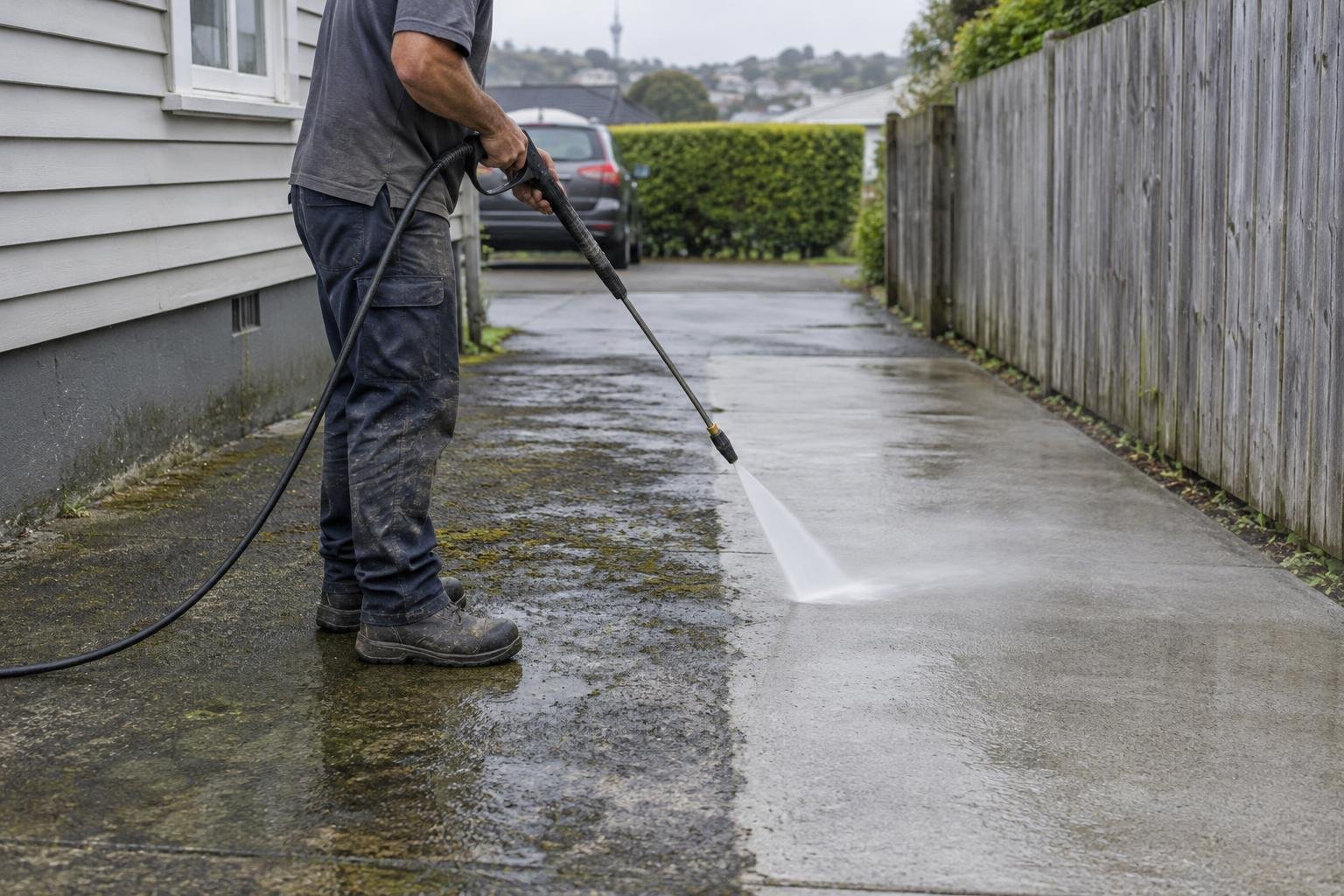
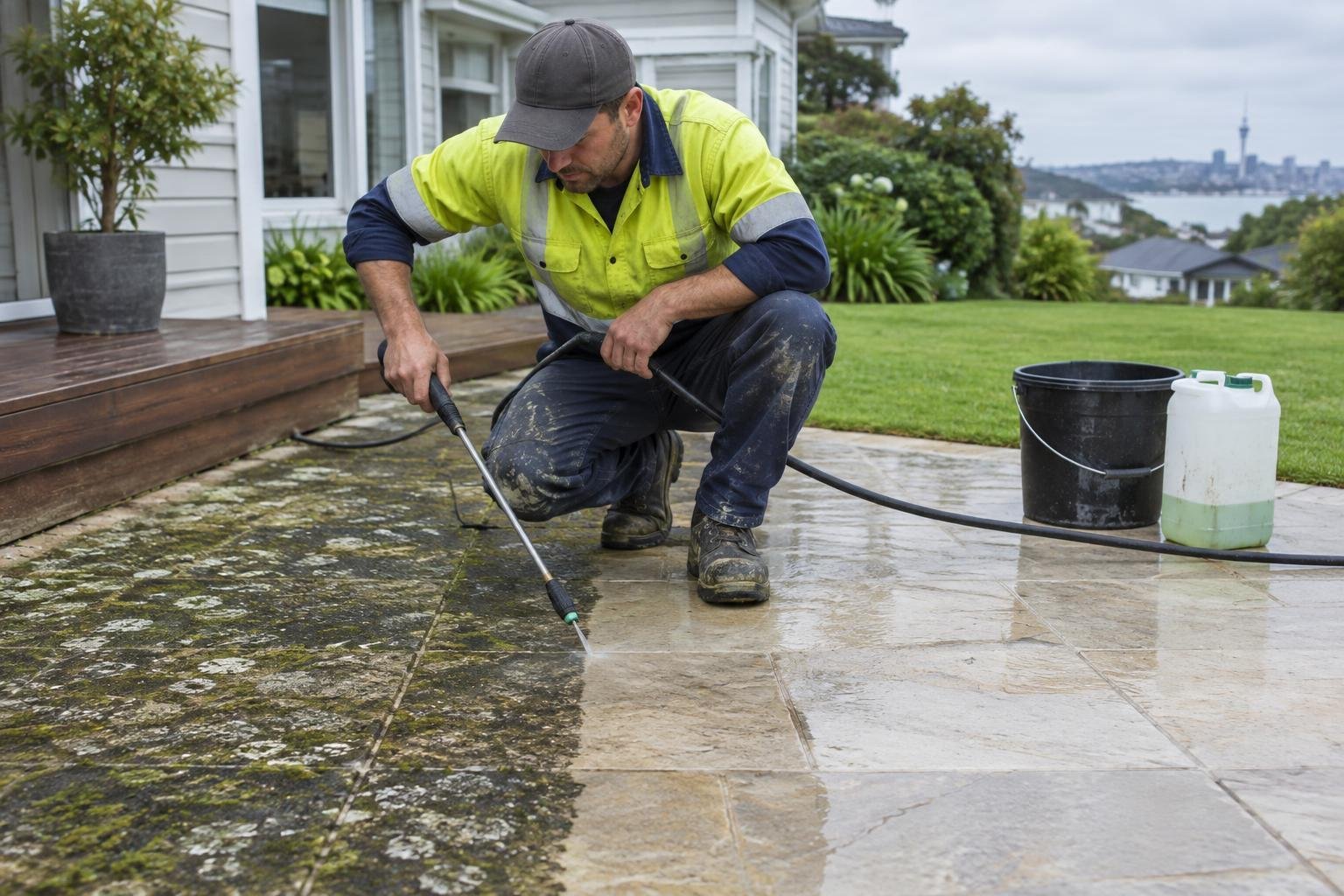
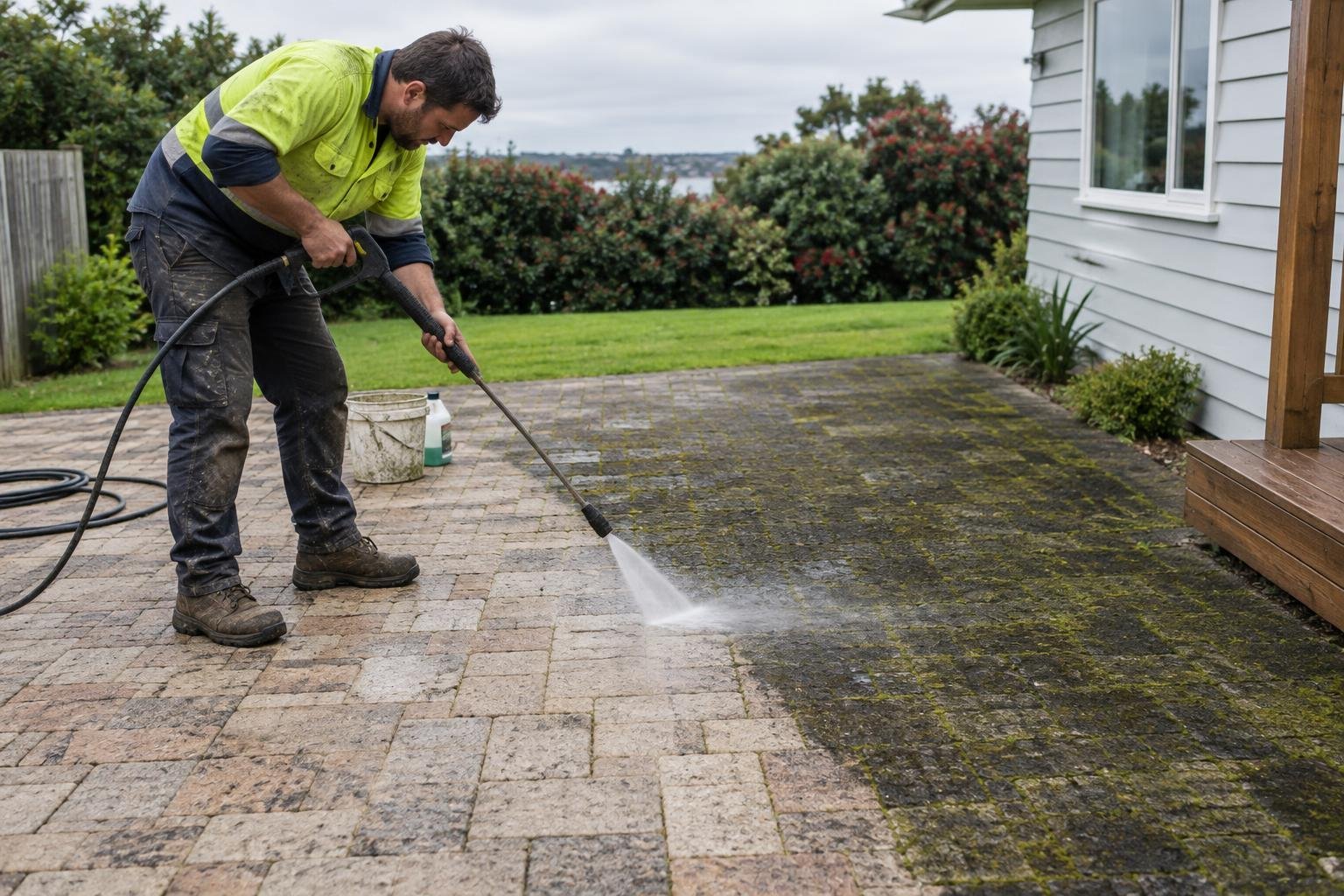
Your Auckland driveway doesn’t have to look like a neglected back road. Black moss streaks, stubborn oil stains, and weathered rust marks are almost inevitable in our damp climate—but they don’t have to stay there. The difference between a driveway that looks tired and one that looks freshly restored often comes down to knowing which cleaning method will actually work, and when professional driveway cleaning services are worth the investment.
Whether you’re armed with a pressure washer and vinegar or considering professional concrete cleaning Auckland solutions, understanding your options—and the risks—can save you from costly damage while delivering the dramatic transformation every homeowner wants. Auckland’s humidity and rainfall create perfect conditions for stain growth, but they also demand the right approach to remove stains from concrete driveways safely and effectively.
Let’s explore the stains you’re facing, the DIY methods that work, and why professional waterblasting often delivers the lasting results that DIY approaches simply cannot match.
- Auckland’s damp climate accelerates moss, lichen, and stain growth: High humidity and frequent rain create ideal conditions for organic growth on concrete, making regular maintenance essential rather than optional.
- DIY methods work for fresh stains, but professional waterblasting delivers lasting results: While vinegar and biodegradable cleaners handle light marks, pressure washing at 3000+ PSI removes deep-set oil, rust, and tyre marks that DIY approaches cannot touch.
- Wrong pressure settings can permanently damage coloured or stamped concrete: Professional operators know Auckland concrete types and adjust PSI accordingly—soft washing delicate surfaces prevents costly damage that homeowners often face.
- Preventative maintenance extends driveway life by years: Sealing concrete and scheduling professional cleaning every 12–18 months stops stain regrowth before it embeds, saving money on intensive removal later.
Understanding Common Concrete Driveway Stains in Auckland
Auckland’s climate creates the perfect storm for concrete driveway stains. The combination of high humidity, frequent rainfall, and abundant shade means your driveway faces relentless moisture exposure that accelerates stain formation and growth. Before tackling how to remove oil stains from concrete driveways or moss patches, you need to identify exactly what you’re dealing with—because each stain type requires a fundamentally different approach.
Oil and grease stains appear as dark, often glossy patches that penetrate deep into concrete pores. They’re slippery underfoot and resistant to water alone. Engine leaks, hydraulic fluid spills, and accumulated automotive fluids create these stubborn marks that worsen over time if left untreated. Rust stains manifest as orange-brown or reddish discolouration, typically originating from metal fixtures, reinforcing rods beneath the surface, or iron-rich soil runoff. Unlike oil, rust doesn’t always indicate a fresh spill—it can be years old and deeply embedded.
Moss and lichen thrive in Auckland’s damp environment, appearing as slimy black-green films or pale grey-white patches, particularly in shaded areas. These organic growths aren’t merely cosmetic; they create slip hazards and gradually deteriorate concrete if left untreated. Tyre marks are rubber residue deposits left by vehicles, appearing as dark streaks or spots, especially where cars brake or turn sharply. Finally, general weathering stains—the cumulative effect of dust, pollen, and environmental discolouration—create a dull, mottled appearance that makes driveways look neglected.
Recognising your specific stain type is essential because vinegar works wonders on organic moss but fails completely on oil, whilst high-pressure washing can eliminate tyre marks yet permanently damage sealed concrete surfaces. This diagnosis-first approach is what distinguishes effective driveway restoration from costly mistakes.
DIY Stain Removal Methods That Actually Work
Not all stains require professional intervention. For organic stains like moss and lichen, a solution of white vinegar and water (one part vinegar to three parts water) sprayed generously and left for 24–48 hours often loosens growth enough for soft-bristled brush removal. Baking soda mixed with water creates a gentle abrasive paste effective for light weathering stains and mild organic growth.
For oil stains, biodegradable degreasers designed for concrete—rather than household vinegar or bleach—are your best DIY bet. These products chemically break down oil molecules rather than simply masking stains. Apply generously, allow dwell time (typically 15–30 minutes), then scrub and rinse thoroughly. This method works moderately well for fresh spills but struggles with deeply set stains.
Tyre marks respond well to a stiff-bristled brush and hot soapy water, especially if tackled shortly after deposits appear. For rust stains, oxalic acid-based rust removers (available from hardware stores) can lighten surface rust when applied and scrubbed regularly, though this demands patience and repetition.
Safety matters: wear gloves, eye protection, and ensure good ventilation when using chemical cleaners. The honest truth? DIY methods deliver satisfying results for light to moderate stains and cost only NZD $20–$50 in supplies. However, they demand substantial physical effort, time investment (often multiple applications over weeks), and simply don’t work on deeply penetrated oil, rust that’s travelled beneath the surface, or moss entrenched in concrete’s microscopic pores.
The Limitations of DIY Pressure Washing
Renting a pressure washer seems like the logical next step when brushing fails. The appeal is real: a 2500–3000 PSI machine can blast away visible grime impressively fast. But here lies a critical danger that homeowners often discover too late.
Standard concrete can tolerate 2500–3000 PSI when handled expertly, but sealed, coloured, or decorative concrete surfaces suffer permanent damage at these pressures. Spalling (concrete flaking away), pitting (surface cratering), and loss of protective sealant can occur within minutes of incorrect application. Even worse, inconsistent pressure or angles create visible streaking and uneven wear that makes the driveway look worse than the original stains.
Deep-set oil and rust stains resist pressure washing entirely because water alone cannot chemically break down these contaminants—it simply cannot reach them. You end up spending NZD $80–$150 renting equipment, investing several hours, and achieving only cosmetic results on the surface whilst the core problem remains. Worse, the high-pressure blast can scatter contaminants across clean areas, spreading rather than eliminating the problem.
Professional Waterblasting: What It Delivers
Professional driveway washing services operate fundamentally differently. Rather than applying universal high pressure, trained technicians diagnose stain chemistry first, then select the precise combination of pressure (often lower than you’d expect), specialised cleaning solutions, and application technique for each specific problem.
For oil stains, professionals apply biodegradable degreasers that chemically break down hydrocarbons at depth, then utilise controlled pressure—often just 1500–2000 PSI—to rinse without damaging the concrete. For moss and organic growth, soft-wash technology uses low pressure combined with eco-friendly biocides that eliminate spores and prevent rapid regrowth. Professional concrete cleaning services can reach rust causes by applying targeted acid treatments that dissolve oxidation, something pressure alone cannot achieve.
The results are transformative. Driveways return to like-new condition within hours rather than weeks. Stain removal extends deep into concrete pores, addressing root causes rather than surface symptoms. Professional work includes expert assessment of whether sealing is recommended post-cleaning to prevent rapid stain regrowth—invaluable insight for Auckland’s humid climate.
Auckland Climate and Preventative Maintenance
Auckland’s humidity and 1600+ millimetres of annual rainfall create conditions where moss and lichen reappear aggressively post-cleaning if no preventative measures follow. This is why professional driveway cleaning Auckland specialists typically recommend 12–18 month maintenance cycles rather than one-off deep cleans.
Driveway sealing applied after professional cleaning creates a barrier that reduces stain penetration and dramatically slows organic growth regrowth. Seasonal timing matters too: spring cleaning (September–November) prepares driveways for summer foot traffic, whilst early autumn (March–April) removes accumulated winter moisture and organic growth before it solidifies.
This preventative approach proves far more economical than emergency deep-stain removal every few years. Consistent maintenance preserves concrete integrity, maintains property aesthetics, and prevents safety hazards from slippery moss-covered surfaces.
Cost Analysis and ROI for Professional Cleaning
Comparing costs reveals why professional investment outperforms DIY attempts long-term. DIY supplies cost NZD $20–$50 but yield temporary results requiring repetition. Pressure washer rental runs NZD $80–$150 with risk of costly damage. Professional driveway stain removal typically costs NZD $400–$1000 depending on driveway size and stain severity, but delivers permanent results that resist regrowth for 12–18 months.
The hidden ROI? A professionally cleaned and sealed driveway maintains property value, eliminates safety hazards, and extends concrete lifespan by years compared to damage from failed DIY pressure washing or deepening stain penetration. When factoring in prevention of repairs, avoided equipment damage, and labour time saved, professional waterblasting becomes not an expense but a strategic investment in long-term property maintenance.
Protect Your Auckland Driveway With the Right Approach
Auckland’s humid climate demands a strategic approach to driveway maintenance. Whilst DIY methods offer budget-friendly options for light stains, they often fall short against deeply embedded oil, rust, and moss—particularly in our moisture-rich environment. Professional waterblasting delivers permanent results by addressing root causes rather than surface symptoms, with preventative sealing extending protection for 12–18 months.
The investment in professional driveway cleaning services extends concrete lifespan, maintains property value, and eliminates safety hazards—making it a strategic long-term investment rather than an expense. Transform your driveway from neglected to pristine by partnering with experts who understand Auckland’s specific environmental challenges.