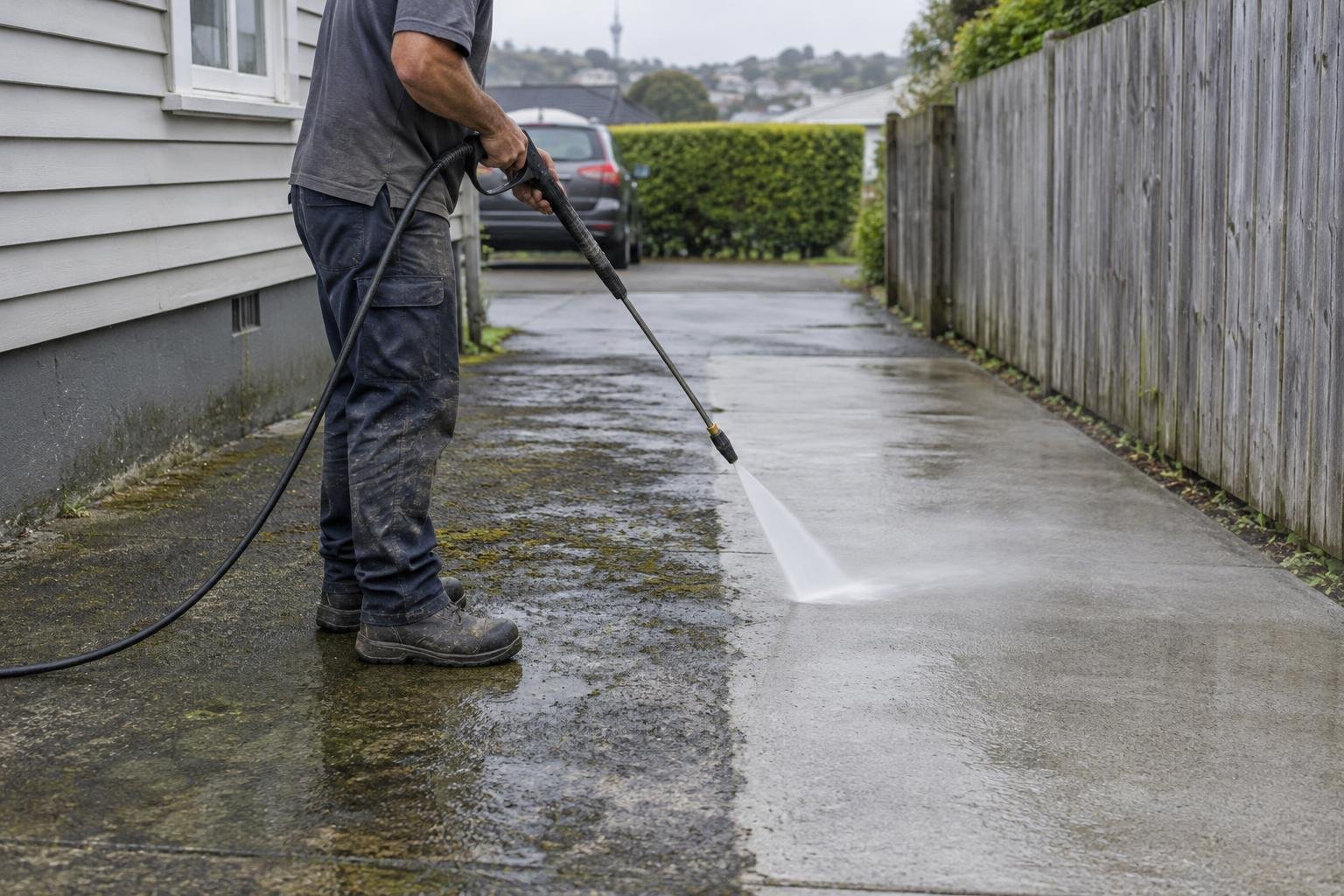
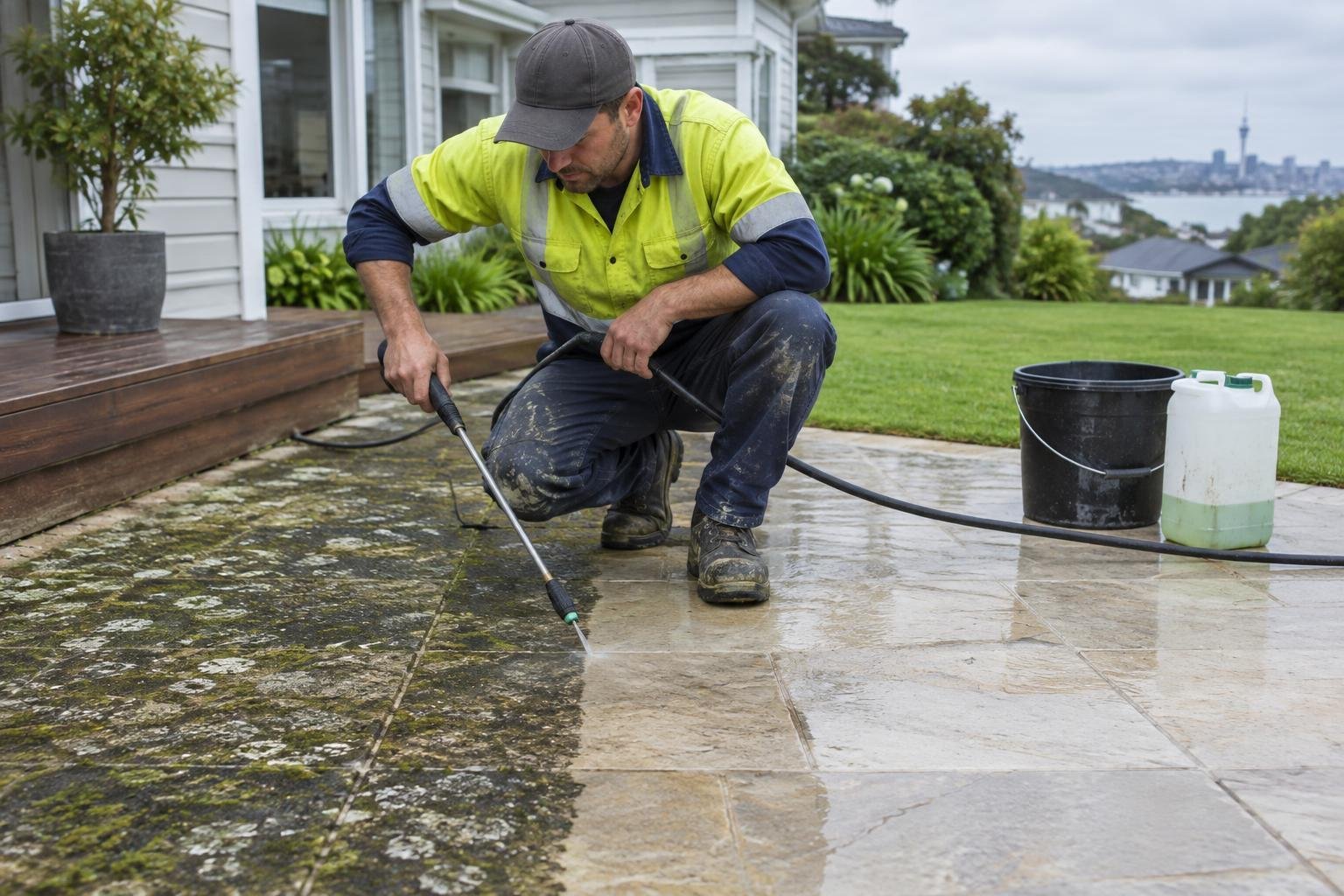
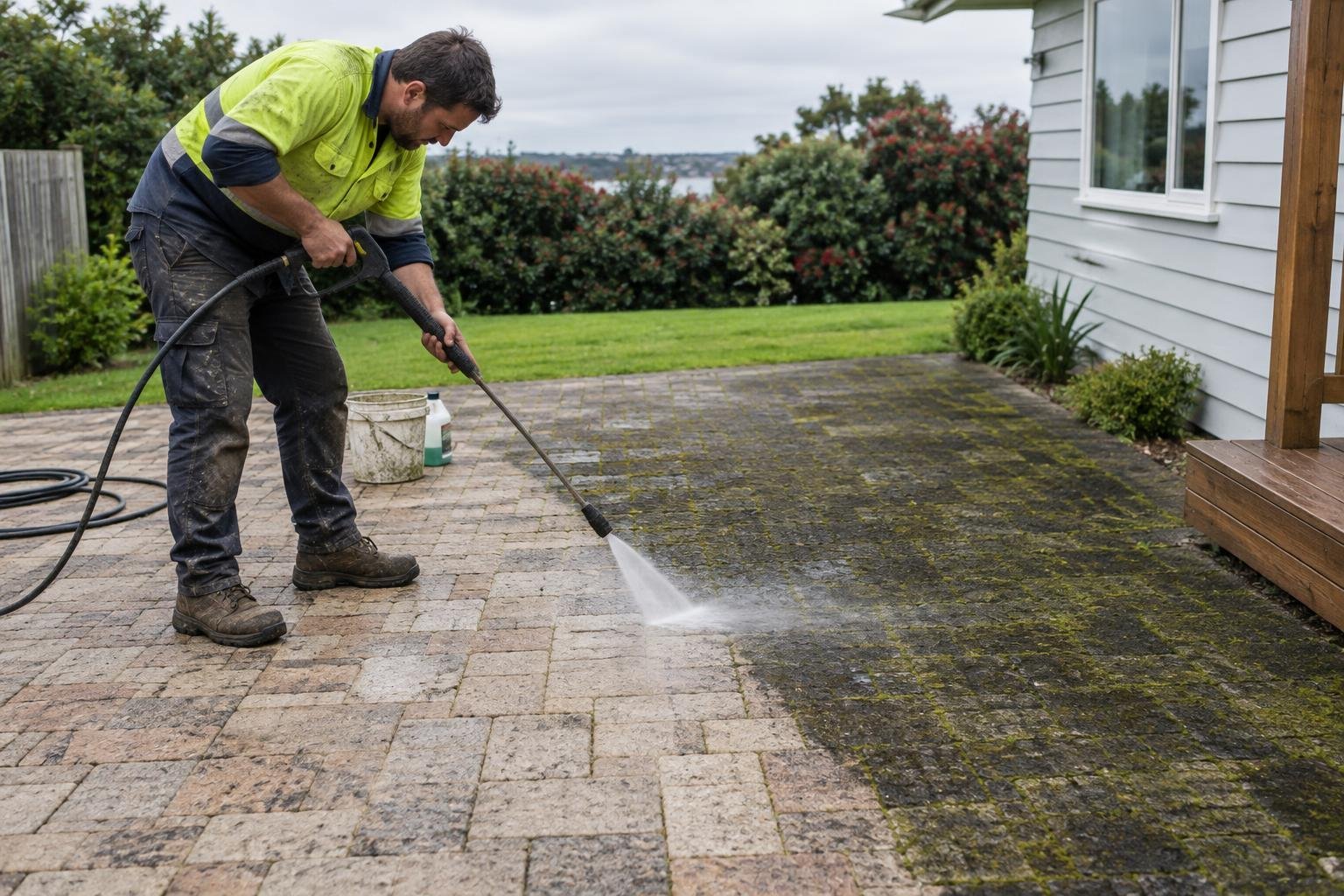
Your block paved driveway in Auckland looks stunning when it’s new—but within a year or two, moss creeps between the joints, algae films the surface, and weeds push through the gaps. The temptation is obvious: grab a high-pressure washer and blast it clean. But here’s what most property owners don’t realise: aggressive pressure washing strips the jointing sand that holds your pavers stable, leaving blocks loose and vulnerable to shifting, uneven settling, and rapid weed reinfestation.
Block paving cleaning Auckland requires a different approach than standard concrete. Your patterned surface demands precision—soft washing to protect joints while removing moss and algae, followed by targeted restoration and sealing. This guide explains why method matters, how to clean safely, and why maintenance schedules prevent costly repairs down the line.
Discover how the right cleaning technique can restore your driveway’s visual appeal while keeping your blocks locked in place for years to come.
- Soft washing protects jointing sand whilst removing moss and algae: Auckland’s humid climate accelerates growth between pavers—gentle soft washing eliminates these without displacing sand or destabilising blocks.
- High-pressure washing risks joint degradation and uneven settling: Aggressive pressure strips jointing material, leaving blocks vulnerable to movement and weed reinfestation across your driveway or patio.
- Re-sanding and sealing after cleaning extends surface life by years: Professional restoration includes joint stabilisation and protective sealing to prevent accelerated wear and reduce cleaning frequency.
- Maintenance schedules prevent costly repairs: Regular cleaning every 12–18 months in Auckland’s climate keeps block paving structurally sound and visually striking without major intervention.
Understanding Block Paving vs. Concrete: Why Cleaning Methods Matter
Block paving and concrete surfaces may appear similar at first glance, but their structural composition demands fundamentally different cleaning approaches. Block paving consists of individual interlocking units held together by compacted jointing sand—a carefully engineered material that provides both structural stability and drainage. Concrete, by contrast, is a monolithic surface with no joints, meaning it can tolerate aggressive pressure without risk of internal destabilisation.
When property owners in Auckland commission block paving driveway cleaning, they often don’t realise that high-pressure washing can strip away the jointing sand that holds the entire surface together. This hidden damage occurs beneath a visually pristine finish, creating a structural time bomb that manifests as settling blocks, accelerated weed growth, and costly repairs within months.
Auckland’s humid subtropical climate—with warm, wet summers (December to February) and cooler, damp winters (June to August)—creates ideal conditions for moss, algae, and lichen colonisation in block paving joints. Understanding this environmental challenge is the first step toward selecting a cleaning method that restores aesthetic appeal whilst preserving the surface’s long-term structural integrity.
The Hidden Risk: How Pressure Washing Destabilises Block Paving
High-pressure washing, typically defined as any system delivering force above 2000 PSI (pounds per square inch), operates by blasting water directly into jointing sand. While this approach delivers an immediately satisfying visual result—the blocks appear pristine and stain-free—the structural consequences are severe and often invisible to the untrained eye.
The mechanism of damage is straightforward: Jointing sand serves as a compacted matrix that locks individual pavers in place and prevents lateral movement. When high-pressure water breaches this matrix, it dislodges and displaces sand particles, creating voids beneath and around the blocks. Over time, these voids allow the pavers to shift, settle unevenly, and lose their structural support. The surface may feel stable immediately after cleaning, but the foundation has been compromised.
One Auckland property owner discovered this lesson the hard way after commissioning an inexpensive pressure washing service on a 60-square-metre block paved driveway. Within six months, visible gaps appeared between pavers, and weeds regrew at an accelerated rate, requiring costly re-sanding and re-laying work estimated at NZD $8,000. What seemed like a budget-friendly clean cost significantly more in remedial work than a professional soft washing approach would have from the outset.
The rapid weed reinfestation cycle following aggressive pressure washing is not a maintenance inconvenience—it is a direct symptom of destabilised joints. With sand displaced and voids created, weed seeds find ideal conditions for germination and root establishment. Property owners then find themselves trapped in a cycle of repeated cleaning and re-growth, each intervention further weakening the jointing structure.
Soft Washing: The Structural Preservation Approach
Soft washing represents a fundamentally different philosophy to patio cleaning Auckland. Rather than relying on brute force, soft washing systems operate at pressures below 500 PSI, combined with specially formulated biodegradable cleaning solutions designed to dissolve organic growth and staining compounds without mechanical disruption to the jointing sand matrix.
The process begins with application of eco-friendly, pH-balanced solutions that penetrate moss, algae, and lichen at a chemical level, breaking down the organic structures that hold these growths to the paving surface. The solution is left to work for a carefully timed interval—typically 15 to 30 minutes—allowing the active ingredients to dissolve biological material thoroughly. A low-pressure rinse then removes the loosened growth and spent solution, leaving the jointing sand undisturbed and fully compacted.
This method proves particularly effective in Auckland’s moist climate, where soft washing not only removes existing moss and algae but also reduces the likelihood of rapid reinfestation through superior moisture management and residual biocide activity in premium solutions. Property owners commonly report that soft-washed surfaces remain cleaner for 12 to 18 months between services, compared to the 3 to 6 month intervals typical of pressure-washed driveways.
Re-Sanding and Joint Stabilisation: Essential Structural Protection
Professional driveway and patio cleaning in Auckland should never conclude with cleaning alone. Re-sanding—the process of carefully applying fresh jointing sand to replace compacted material and fill any minor voids—is a structural intervention, not an aesthetic option.
During re-sanding, trained technicians assess the integrity of existing jointing material and selectively replace compromised sections with premium, kiln-dried polymeric sand. This specialised sand contains binding agents that activate when exposed to moisture, creating a semi-rigid joint that resists displacement whilst maintaining flexibility to accommodate minor seasonal movement. In Auckland’s damp environment, polymeric sand significantly outperforms standard sand by resisting washout and maintaining compaction through winter’s wet season.
Once re-sanding is complete, a professional sealing protocol provides the final layer of structural protection. High-quality paver sealers penetrate the porous surface of block paving and partially fill the jointing material, reducing water infiltration and preventing weed seeds from establishing root contact with compacted sand beneath.
Sealing: Long-Term Stain Resistance and Maintenance Reduction
Applying professional-grade sealer after soft washing and re-sanding extends the interval between cleaning cycles and reduces the frequency of maintenance required. Auckland properties that receive sealing protection typically require professional cleaning only every 18 to 24 months, compared to annual or bi-annual intervals for unsealed surfaces.
Sealers function by creating a hydrophobic barrier on the paving surface and within surface-level pores, reducing the adhesion strength of dirt, oils, and organic growth. Stains that would permanently mark unsealed pavers wash away easily from sealed surfaces, and the protective layer significantly slows moss and algae colonisation by reducing the moisture retention that these organisms require.
For Auckland homeowners and commercial property owners, professional sealing represents a protective investment that prevents costly structural repairs, reduces cleaning frequency, and extends the aesthetic lifespan of block paved driveways and patios by 5 to 10 years compared to unsealed alternatives.
Selecting Professional Block Paving Cleaning Services
When evaluating block paving cleaning services in Auckland, property owners should prioritise providers who explicitly discuss soft washing methodology, jointing sand integrity, and post-cleaning re-sanding and sealing protocols. Any service promising rapid turnaround times or quoting exclusively on pressure washing alone should raise caution flags.
Professional providers should offer detailed quotes that specify pressure thresholds (ideally below 500 PSI), cleaning solution composition, re-sanding materials (polymeric sand preferred for Auckland’s climate), and sealer type and warranty. Booking a free quote allows property owners to discuss their specific paving condition, climate exposure, and maintenance expectations before committing to a service plan.
Protecting Your Investment: The Right Cleaning Choice Matters
Block paving requires a fundamentally different approach than concrete, and choosing the wrong cleaning method can compromise structural integrity for years to come. Soft washing combined with professional re-sanding and sealing preserves both the aesthetic appeal and long-term durability of your Auckland driveway or patio, whilst aggressive pressure washing creates hidden damage that manifests as costly repairs.
When selecting a block paving cleaning service in Auckland, prioritise providers who discuss soft washing methodology, jointing sand protection, and post-cleaning stabilisation. Book a free quote today to discuss your paving condition and ensure your investment receives the professional care it deserves.